
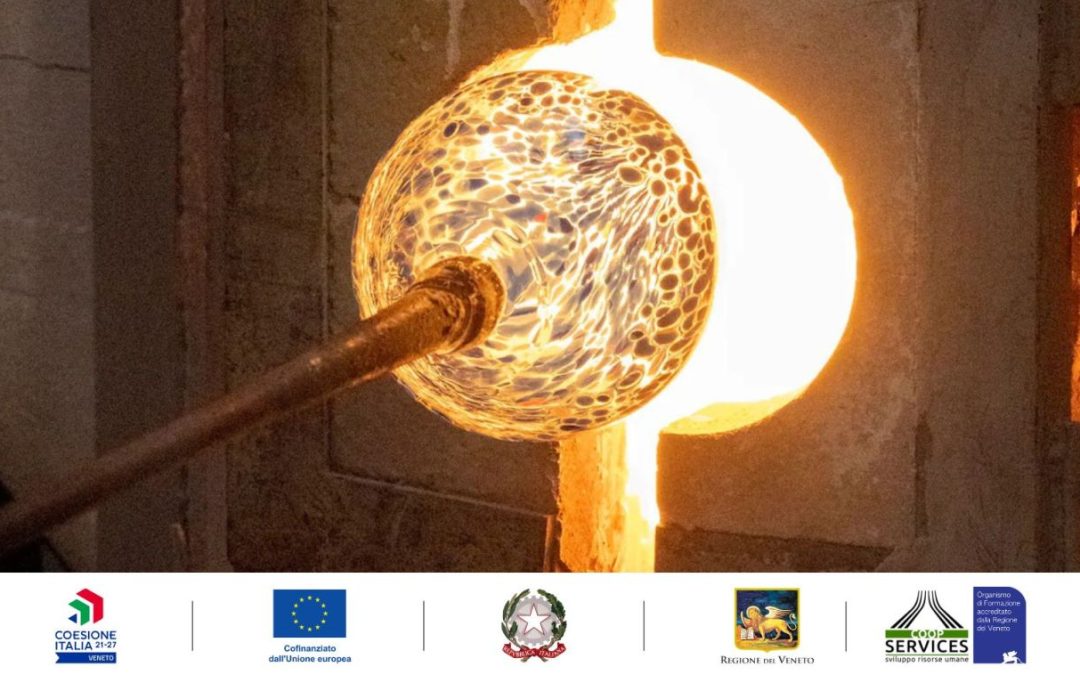
The inaugural event of the project “Murano 3D: Innovation and Sustainability for Artistic Glass”, funded by the Veneto Region through the PR Veneto ESF+ 2021–2027, was held on Monday, October 21st, at Palazzo Barovier&Toso.
The meeting, which saw the participation of local glassworks, the University of Padua, the IUAV University of Venice, the Veneto Region, the Promovetro Consortium, and Confindustria, began with a visit to the Barovier&Toso glassworks showroom—an engaging and fascinating experience for all attendees.
The roundtable discussion, coordinated by Dr. Maria Claudia Pignata, CEO of VeniSIA, opened with remarks from Terenzio Zanini, President of the Regional Innovation Network for Artistic Manufacturing – Euteknos. He explained that “the training project aims to provide the necessary skills to support the green and digital transition of artistic glassworks.”
Next to speak was Luigi Lucchetta, CEO of Barovier&Toso, who expressed “heartfelt gratitude to the Veneto Region for its support during the pandemic crisis and in addressing the energy cost crisis.”
Professor Paolo Colombo, from the University of Padua, presented the results of the “D3Vero” research project – 3D printing in service of Murano artistic glass, which will form the core of the training activities aimed at glassworks professionals and master glassmakers. The presentation was further enriched by Project Manager Antonino Italiano, who emphasized “the importance of training for companies in the artistic glass sector to develop the ability to adopt innovative solutions, such as using new molds created through 3D printing technology.”
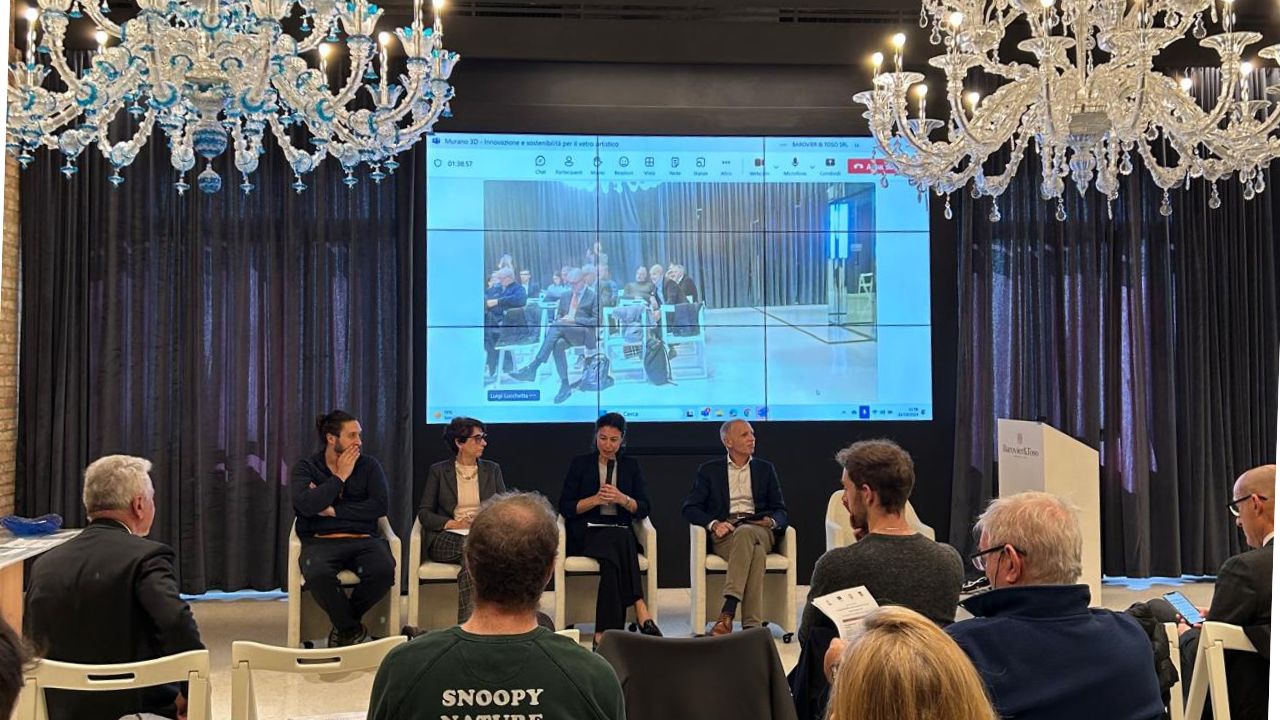
Santo Romano, Director of the Economic Policy, Human Capital, and EU Programming Department, outlined the resources that the Veneto Region offers to companies for technological and training development.
The roundtable featured prominent speakers:
- Rita Steffanutto, Regional Director for Research and Energy
- Stefano Miotto, Director of Confindustria Veneto SIAV
- Roberto Beltrami of Wave Murano Glass
Marco Lazzarato, professor at the Academy of Fine Arts in Bologna and scientific advisor for Euteknos, spoke about ongoing research into quality standards and the ethics of form. He linked these to the creative awareness of artistic artisans and the introduction of tools to enhance the value of artistic manufacturing products in target markets.
This gathering represented an important opportunity for reflection on the future of the Murano glass industry, allowing for an in-depth analysis of both the opportunities and challenges ahead.
A particularly meaningful aspect of the event was the active involvement of the audience. Numerous questions and contributions enriched the discussion, sparking a lively and constructive debate among the project’s partner companies, all committed to cooperating for the development of the sector.
The conference marks the beginning of a training and renewal journey aimed at integrating artisanal tradition with technological innovation, thereby enhancing the competitiveness of the artistic glass supply chain and promoting a more sustainable industry.

